What drives rural fencing cost
Rural fencing cost comes down to a short list of things: the type of fence and what it is made from, how long the line is and how many gates and corners it has, the ground and how hard the line is to reach, where the property sits, the labour involved and, for an electric fence, the parts that keep running. This guide explains each one. It prints no dollar figures, because a number means little until the line, the ground and the ends are known.
If you are asking how much a farm fence costs, the useful answer is a set of questions. The table below turns each cost driver into something you can tell a contractor, so the quote you get back is for your paddock and not for an average one.
| Cost driver | How it moves a quote | What to tell the contractor |
|---|---|---|
| Fence type and materials | A wire fence, a mesh fence, a timber rail fence and an electric fence use different materials and different amounts of labour. Wire grade, post material and treatment are separate choices inside each. | What the fence must hold: sheep, cattle, horses or pest animals |
| Length | More fence means more materials, more machine time and more days on site. The way the length was measured also matters. | Rough length, and whether you paced it, measured it or read it off a map |
| Gates and corners | Each gate, corner and change of direction needs its own stronger assembly, so a short, twisting fence can cost more than a long, straight one. | Where the gateways and corners fall and how wide the gates should be |
| Terrain and soil | Slope, rock, wet ground and soil type change how posts are set and how fast the work goes. The contractor decides how to set the strainers on your soil. | Any rock, soft or wet patches, creek crossings or earlier trouble digging |
| Access and location | A line a truck cannot reach adds handling time, and the distance from the contractor's base to your property can add travel. | Tracks, gates to reach the line, paddock access and any crop or stock in the way |
| Labour and timing | The number of workers, the machinery used and the time of year affect the labour line. Fire danger rules and wet weather can move dates. | Your preferred dates and any hard deadline |
| Electric fence running parts | An electric fence carries parts that wear or need replacing over time, such as batteries, wire and poles. They are a running cost as well as a purchase cost. | Whether the fence is electric, and what the quote says about running parts and checks |
The drivers are not equal on every job. On a long, open boundary, length and the number of ends may decide the total. On a small paddock with many gates, the gates and corners may matter more. When two quotes disagree, compare them driver by driver before you compare the totals.
Fence type and materials
Fence type is one of the larger choices. The sheep and cattle fencing page covers stock fences and the electric fencing page covers energisers and flood-country wiring. Inside a type, the materials differ again. One manufacturer's data sheet for hinge joint livestock fence lists three wire grades: mild steel, light high tensile and high tensile, each with its own wire diameters. A quote should say which grade is priced, because the grade is a line of its own.
Posts are another line. A timber industry education body rates timber into four durability classes for use in the ground, with class 1 the most durable, and says treated softwood posts should be specified to H4. A quote that names the species or treatment class lets you compare like with like. One that says only "posts" does not. The page on how long rural fences last explains the classes.
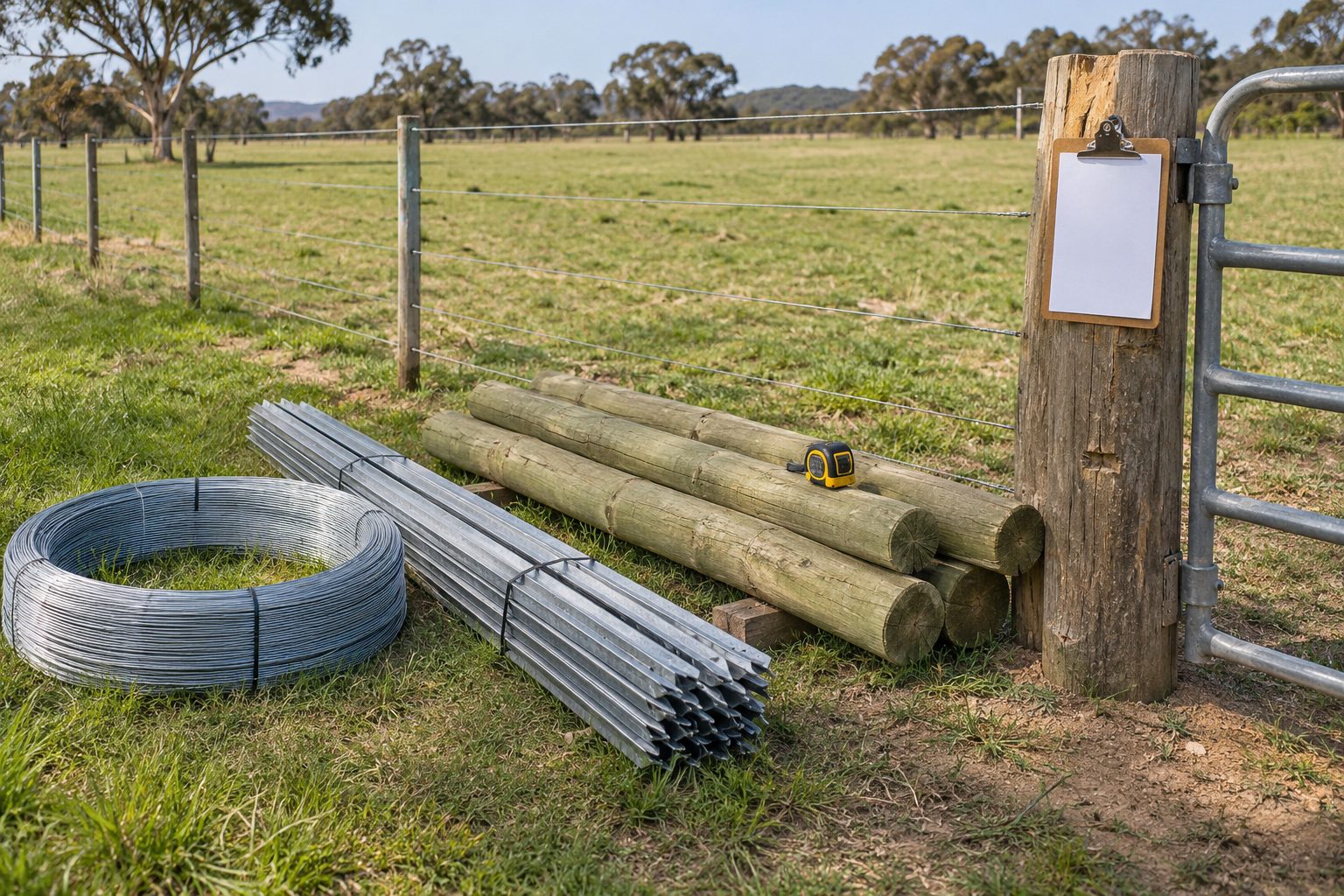
Length, gates and the ends of the line
Length is the first number a contractor asks for, and it is the one most often guessed. Ask how it will be measured and who confirms it on site. If the quote says "about" a length, ask what happens to the price if the line turns out longer or shorter.
Gates and corners are the other half of the story. They are where a fence is under most strain, so they are where a quote should name the most detail. We found no source with a post spacing or strainer specification for Riverina conditions, so we give none. Ask the contractor what they will build at each end and gate, and why.
Ground, access and soil
Soil and terrain change the work, and the sources we read do not turn that into a rule. One paper on the soils of the Riverine Plain describes cracking with wetting and drying but says nothing about fence posts. So we make no claim that one soil is harder than another. What we can say is that soil type and wet and dry cycles can affect how posts and strainers behave, so ask each contractor how they will set strainers on your soil and what they will do if they meet rock or wet ground.
Access is simpler to price. A line beside a gravel road is easy to supply. A line across a paddock that floods, or through a crop, needs a plan. Tell the contractor about any season when the paddock is wet, sown or stocked, and about any powerline or underground service near the line. Ask who arranges those checks.
Labour, timing and electric fence running parts
Labour is the least visible line. Some quotes show a day rate and some roll labour into a total. Either way, ask what the labour line assumes about machinery and the number of people. Fire danger rules can move work dates in summer, so check current fire danger rules for your area and ask the contractor how they will affect your dates.
For an electric fence, the quote should also say what the fence needs after it is built. Batteries, wire and pole replacement are the running parts, and a good quote says what the contractor expects to check and how often. The contractor can tell you which standard their energiser installation meets.
If a neighbour shares the fence
On a boundary, the price of the work is only half the question. Under the Dividing Fences Act, in the version we found, neighbours usually share the cost equally, and an owner who wants a higher standard pays the excess. That starting point is about the split, not the contractor's rate. The dividing fences guide explains the notice and the one month wait. Ask the contractor to quote the fence, and settle the split with your neighbour separately.
Licence and insurance questions
Licensing rules differ by job. The NSW Government fencing page we found speaks about fencing on residential property boundary lines, and we could not confirm that it covers rural or farm fencing, so ask the contractor which licence or registration and which insurance apply to your job. The contractor checklist carries the longer list of questions, including how to compare quotes line by line. When you are ready, send the town, the fence type and a photo of the line.
What this guide cannot do
A cost guide cannot tell you what your fence will cost, which fence type suits your land or what a fair rate is. We are a referral service: your enquiry is passed to a local contractor, who sets their own terms, and we do not quote, build or sign contracts. The drivers above show what to ask, not what to expect, and we found no source that would let us publish a figure for the Riverina.
Treat any single number, including one from a friend, with care until you know the line, the ground and the ends it was priced for.
Check the current rules before you rely on this
This page describes the factors that move the price of a rural fence in the Riverina and what to tell a contractor before a quote. It describes the rules in general terms as they stood in November 2026. Standards, forms, thresholds and fines change.
The authoritative sources are Australian timber industry education body, fencing (durability classes and treatment), One manufacturer's hinge joint livestock fence data sheet (manufacturer claims are the manufacturer's), NSW Government, fencing work (licences and credentials; speaks about fencing on residential property boundary lines) and Dividing Fences Act 1991 (NSW), in-force version dated 7 December 2024 (check the current version). Where anything here differs from those sources, they are right and we are not.
We are not fencing contractors, builders, regulators or lawyers. For what applies to your fence, ask the contractor which licence or registration they hold for your job, then ask NSW Fair Trading or Building Commission NSW if you are unsure, and ask the council that covers the land.
Accurate at the time of writing, November 2026. Always check the source before relying on it.